by Eileen Tully

Suffering is part of life in this Valley of Tears. Illness, death, financial struggles, infertility, betrayal, and abuse – all of these things can rob us of our peace and create anxiety and fear in our hearts.
But God does not want us to live this way.
Philippians 4:6 tells us, “Do not worry about anything, but in everything by prayer and supplication with thanksgiving let your requests be made known to God. And the peace of God, which surpasses all understanding, will guard your hearts and your minds in Christ Jesus.”
God wants us to have this peace which surpasses understanding, but it’s not found in a steady job, a spa day, a healthy family, or even a quiet adoration chapel.
Peace is deeper than this.
Because if we are anxious or upset about something, even a spa or a quiet adoration chapel won’t bring us peace. If we find ourselves ruminating, fearful, or in despair, we do not have peace.
The peace has to be present inside of us, guarding our hearts and minds against fear and anxiety, no matter what our circumstances may be.
As someone who spent many years of my life as a Protestant, I have found that there are three things that the Catholic Church offers that bring me tremendous peace despite my trials and sufferings.
1 – The Crucifix
Although I was baptized Catholic and made my First Communion in the Catholic Church, I spent over 20 years of my life as a Protestant. All throughout my 20s, I attended a very large Protestant church. It was held in a brand new building, and its carpeted gymnasium-cum-“sanctuary” had a stage, fold-away basketball nets, and large screens for displaying worship lyrics or powerpoint slides. But it did not even have a cross, let alone a crucifix.
The stage was front and center. The pastor, the worship leader, the band – these were the focus for the hundreds of people who filled the cushioned, stackable chairs every week.
And I’ll admit that as a Protestant, I didn’t like looking at a crucifix. It felt too morose. Jesus was no longer on the cross, so why should we continue to picture Him there?
But since my conversion (reversion?) to Catholicism, I’ve come to recognize that looking at a crucifix is one of the most comforting things we can do when we are suffering.

Not only does it put all of our hardships into perspective, it also reminds us that we do not serve a God who was unwilling to undergo suffering Himself. When He told His disciples that if anyone would come after Him, he must deny himself, take up his cross and follow Him (Matthew 16:24), He showed us how by going first.
Even then, most crucifixes are sanitized versions of what Christ actually endured. Naked, beaten beyond recognition, and with much of his beard torn out, Our sinless Lord endured the cruelest punishment possible to demonstrate the greatness of His love for us.
Hebrews 12 tells us that Christ endured the cross “for the joy that was set before Him.” The joy wasn’t the cross. He didn’t love the cross or enjoy the cross. He endured it, because He knew that joy lay beyond that most painful Passion.
Whatever our suffering, for most of us, it will not include an experience like the crucifixion. Looking at a crucifix helps us to put our suffering in perspective. It helps us to trust that just as Jesus endured His suffering because it led to something greater, so our own sufferings can lead to our good and God’s glory if we look with spiritual eyes beyond what is seen to what is unseen. (2 Corinthians 4:18)
2 – The Blessed Mother
As He was dying on that cross, Our Lord gave us His mother as our own mother. As a Protestant, I did not understand the significance of this.
Not only did Mary play no role in my faith as a Protestant, but because I also had a mother wound, it took me a while to understand Mary’s role even as a convert. When I came back into the Church, I said to the priest that I really just could not get on board with the Marian dogmas. I told him that I believed they could be true, but didn’t really believe in my heart that they were true. Plus, I didn’t really see the need for Mary to be involved at all. I was fine with the Father, the Son, and the Holy Spirit. I didn’t want another mother.
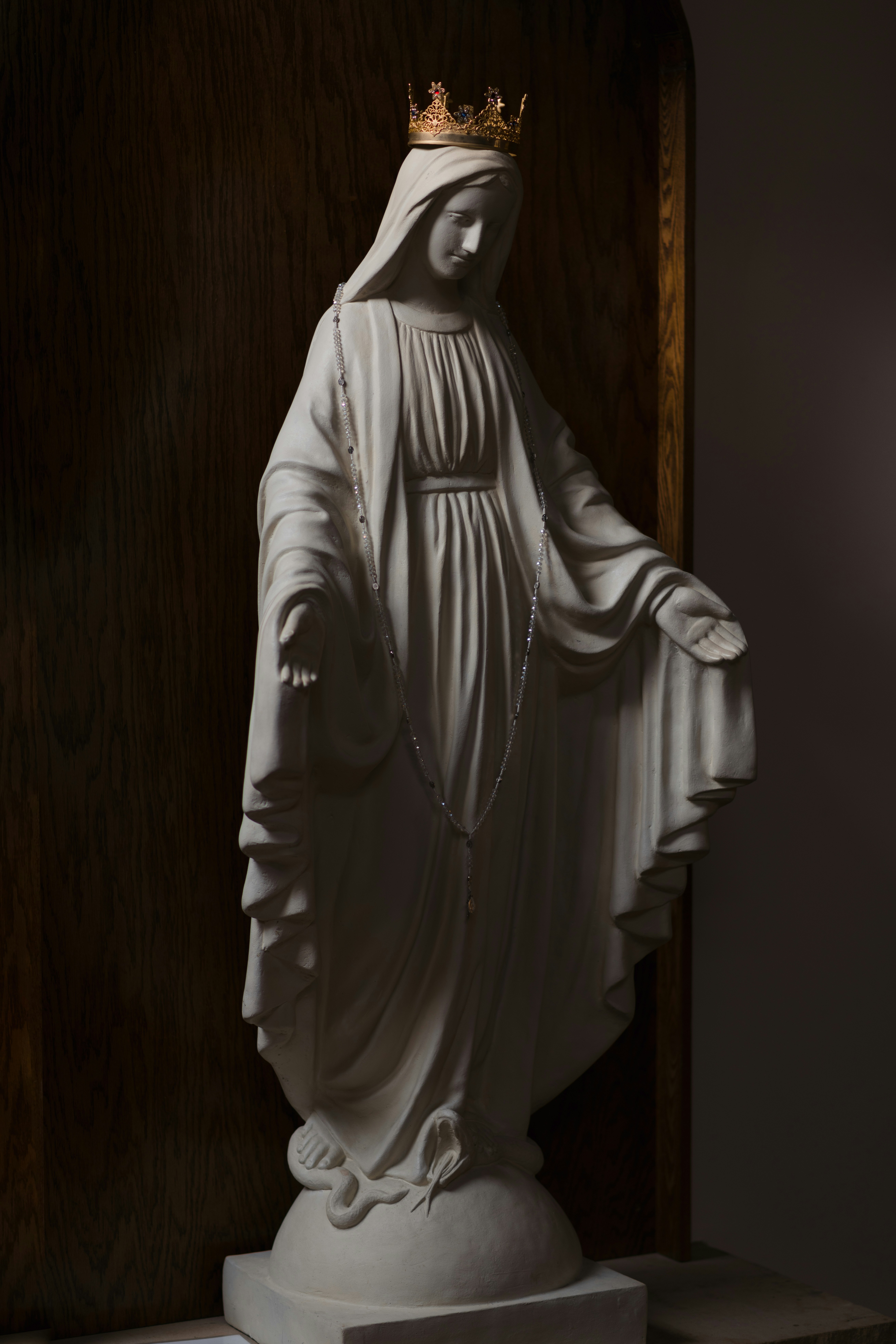
After the death of my twin daughters, however, Mary made herself known to me in a very gradual but very real way.
First, I felt a prompting to pray the rosary – something that I did not do because I didn’t understand it. (Why the repetition? Why the Hail Marys? Why not just pray directly to God with words that came from my heart?)
But deep in my grief, prayer felt hard.
I didn’t know what to say to God after I’d prayed so hard asking Him to save our girls and He didn’t. If I did pray, it was either a desperate “Help!” hiccuped through my sobs or a begrudging “Why bother asking You for anything? You’re going to do what You want anyway.”
Because it felt so hard, prayer happened less and less frequently. God seemed far away and I didn’t know what to do to repair my relationship with Him.
But then one quiet morning, I felt a nudge in my heart to pray the rosary. I didn’t know how to do it, so I looked on YouTube and found a video to pray along with.
It felt like a balm to my broken heart.
The repetition – the very thing that always seemed so silly about the rosary to me – actually brought me so much comfort. It was peaceful.
I began praying the rosary every morning, and I believe that Our Lady used that as a way to make herself known to me.
In the years that followed, she would demonstrate to me, through her answering of novenas and a personal encounter I felt with her as Our Lady of Sorrows, that she was a loving and powerful mother who knows that suffering is part of life on this earth and wants to give us the graces that we need to endure it.
Asking Our Lady to intercede for me and mother me through my suffering has been one of the most healing experiences for me. Our Lady sets a beautiful example for us as a mother who submitted herself to God’s will and endured the death of her Child while maintaining perfect virtue. She kept her eyes on Jesus and believed that He was following God’s plan for the salvation of the world. This allowed her to maintain peace in spite of her tremendous sorrow.
Honoring Our Lady, her suffering, and her virtue are all gifts to us that the Catholic Church offers that I never knew existed as a Protestant.
Advertisement

3 – The Eucharist
The sacraments, and specifically the Eucharist, are another source of peace that the Catholic church offers us in our suffering.
The Eucharist, as Christ’s body, blood, soul, and divinity, recalls both His incarnated body and His resurrected body.
At His incarnation, angels announced the birth of Jesus to the shepherds and said “Glory to God in the highest heaven, and on earth peace to those on whom his favor rests.”
Hundreds of years earlier, the prophet Isaiah foretold the coming Messiah, saying, “For a child is born to us, and a son is given to us, and the government is upon his shoulder: and his name shall be called, Wonderful, Counselor, God the Mighty, the Father of the world to come, the Prince of Peace.”
After He instituted the Eucharist during the Last Supper, Jesus said to his disciples, “Peace I leave with you; my peace I give to you. Not as the world gives do I give to you. Let not your hearts be troubled, neither let them be afraid.” (John 14:27)
And when He appeared to the disciples after His resurrection, the first words Jesus says to them are, “Peace be with you.” He says this twice while showing them His hands and side, and then it’s the first thing He says to Thomas a week later. (John 20)
This peace did not mean that the disciples would be free from troubles or problems. In fact, most of them were martyred for their faith in Jesus. But Jesus specifically says, “I have said these things to you, that in me you may have peace. In the world you will have tribulation. But take heart; I have overcome the world.” (John 16:33)
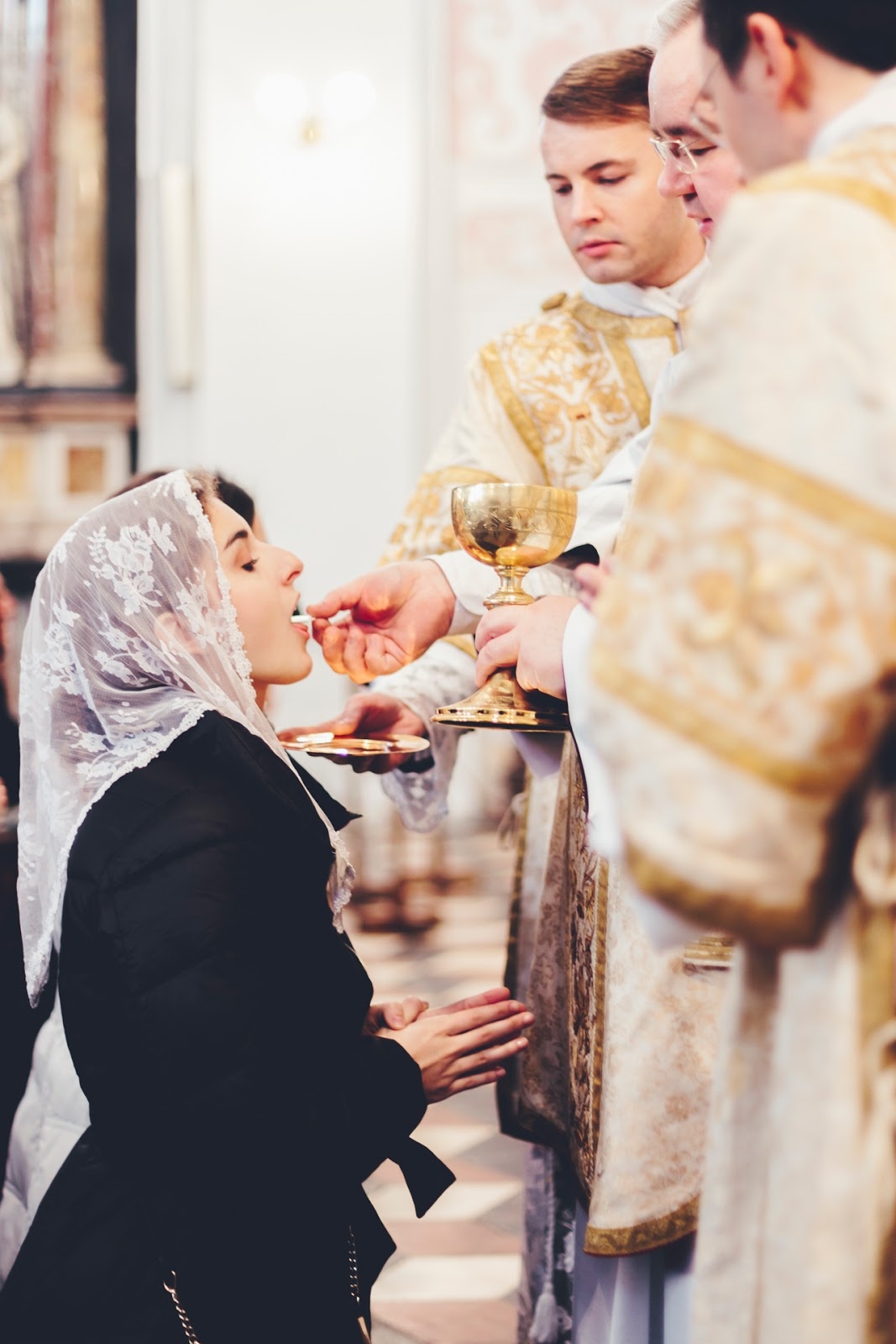
Jesus is the Prince of Peace. Where Jesus is, there is peace.
Protestants do not have the Eucharist. They may have “Communion” of bread and wine, but their bread is not Jesus.
As Catholics, we have the Eucharist as a source of peace for our souls.
If you are suffering, Jesus – and the Church He established – offers you peace.
Not a peace that means no problems, not peace that is dependent on our circumstances, but real and lasting peace that calms the storm inside us and comes from fixing our eyes on Jesus and on the unseen eternal that lies beyond the trials and tribulations of this life.
“You keep him in perfect peace whose mind is stayed on you, because he trusts in you.”
– Isaiah 26:3

Eileen Tully is the editor of Those Who Mourn, and founder of Sursum Corda, an apostolate for women who have experienced pregnancy and child loss. She is a Catholic convert who lives in New Hampshire with her husband and six of their children, while four others intercede for them in heaven. You can learn more about Eileen’s apostolate at EileenTully.com, or follow her on Instagram.